

A galaxy cluster collision revives the cosmic Treble Clef
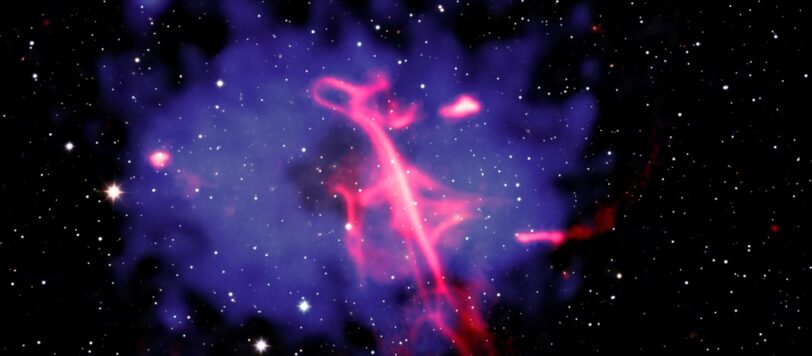
A long-faded black hole outburst may have left material that a cosmic collision made visible again. That is the proposed history of VLSS J0318.9+5755, a radio source nicknamed the Treble Clef because of its distinctive outline.
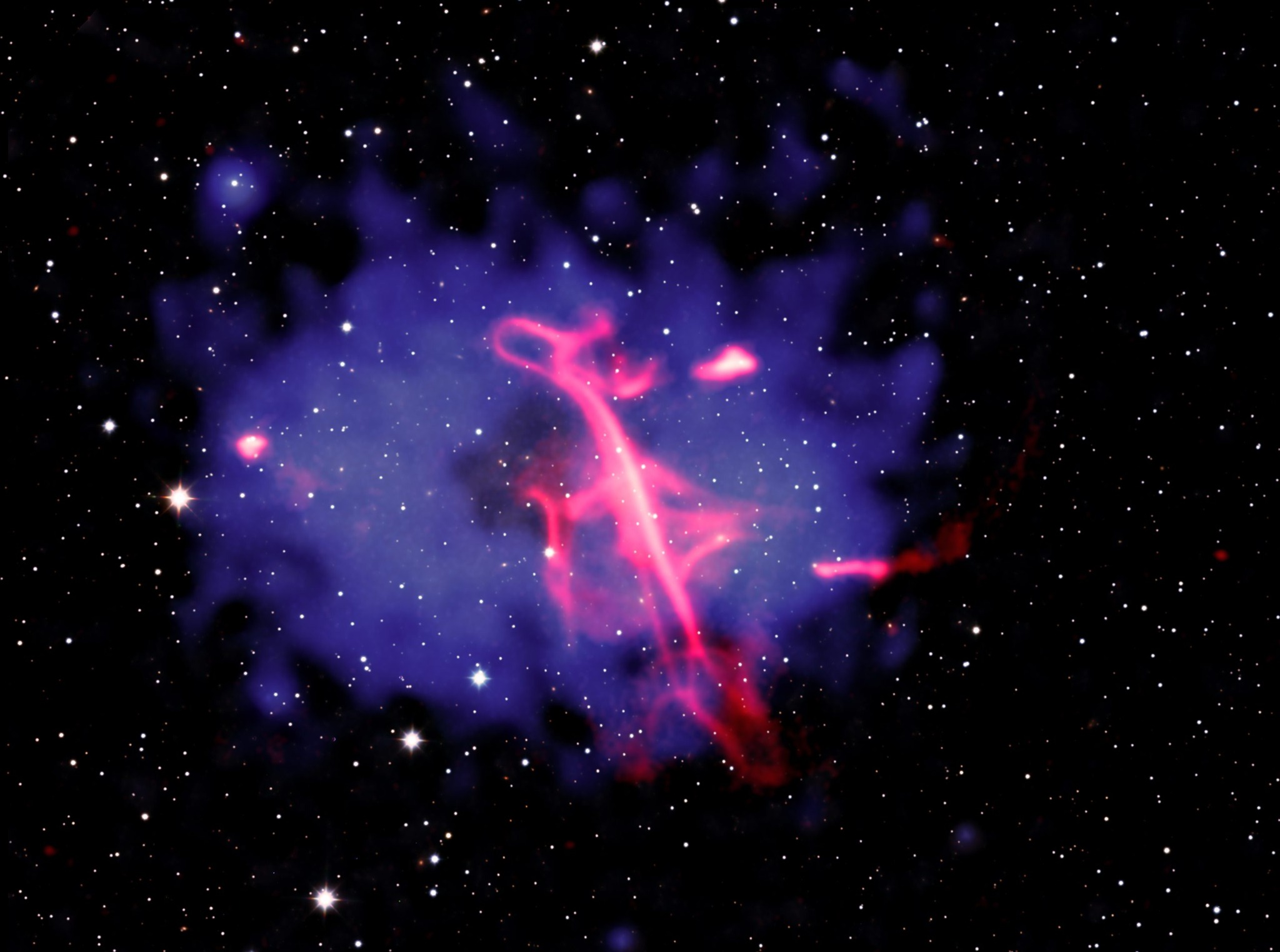
The research, led by Andrea Botteon at INAF, brings together radio and X-ray observations. Chandra and eROSITA reveal hot gas associated with two merging galaxy clusters, providing a setting for the tangled radio filaments.
The team interprets the source as a radio phoenix: plasma from past black hole activity that faded before compression or renewed energy during the cluster interaction made it shine again. The findings connect the source’s unusual appearance with the changing environment around it.
The detailed mechanism still needs investigation. The musical nickname describes a visual resemblance, rather than sound travelling through space.
Sources: Chandra, release of 14 October 2026; Botteon and colleagues, study accepted by Astronomy & Astrophysics.