

Swift returns to Earth: the legacy of the telescope that chased gamma-ray bursts
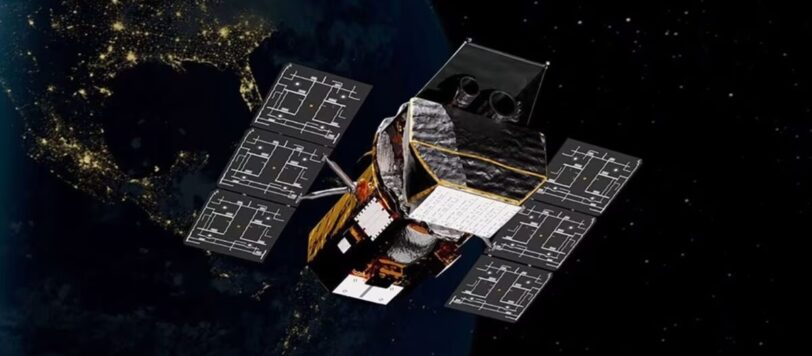
Eleven photons tell the story of what made Swift distinctive. In May 2005, a gamma-ray burst lasted about 40 milliseconds. Just over a minute later, the spacecraft’s X-ray telescope was already observing that patch of sky. Those eleven photons revealed the first X-ray afterglow detected from a short gamma-ray burst. Its location was consistent with a merger of compact objects, though it could not establish the source on its own.

Swift was designed to make the most of that brief window. A wide-field instrument watched for bursts, and the spacecraft could turn autonomously to bring its X-ray and ultraviolet/optical telescopes onto the target. An alert gave observatories on Earth a chance to follow the event before it faded.
Swift made its last observation on 20 October. Atmospheric drag had lowered its orbit, and the robotic spacecraft LINK, sent to raise it, developed orientation problems. The boost was never attempted. Swift re-entered at 12:39 UTC on 4 November over North Sumatra, Indonesia. NASA expected most of the spacecraft to burn up but did not rule out some components surviving. The mission’s observations remain available in a public archive.
Sources